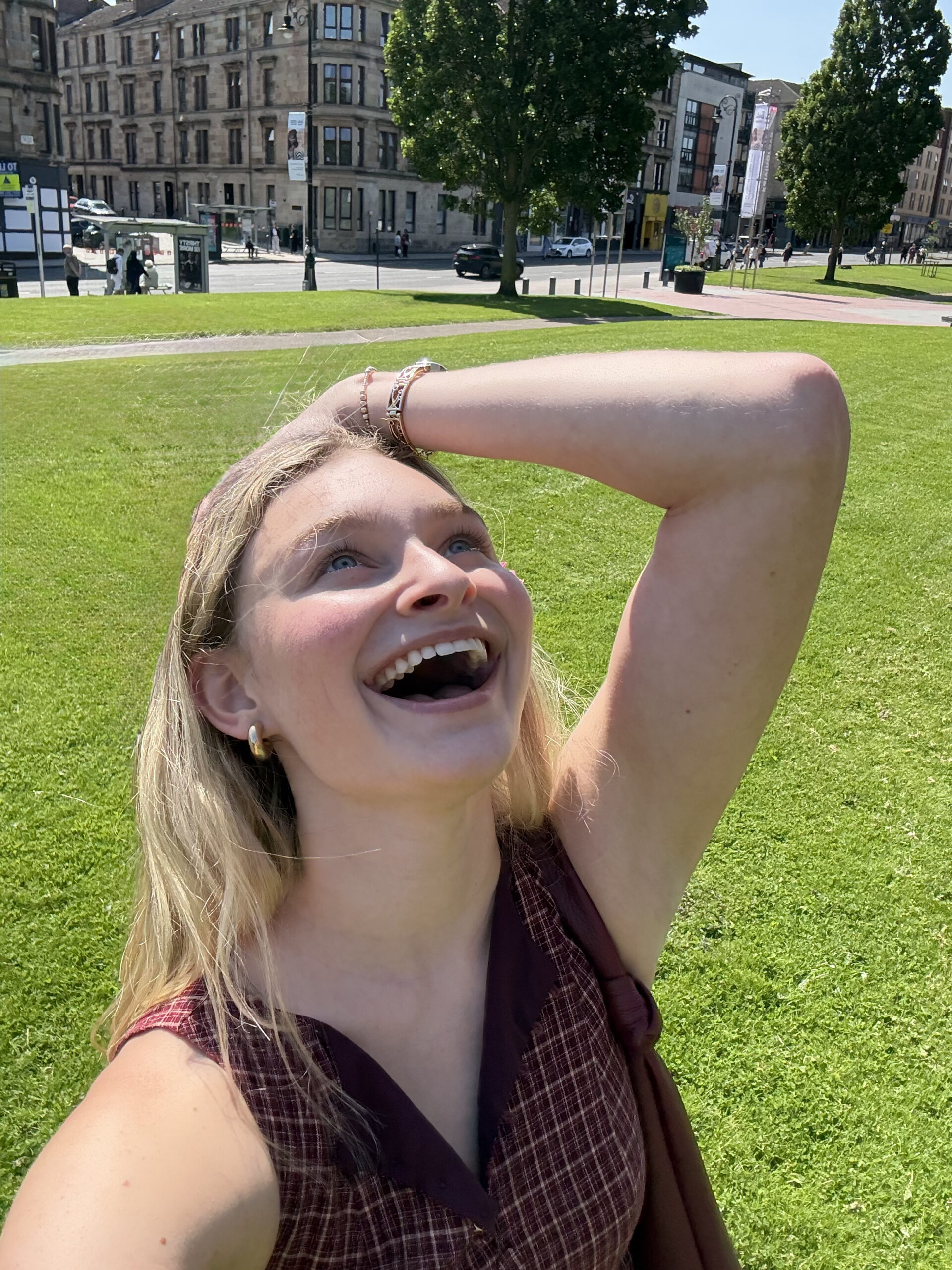
With an hour to spare before seeing our first show in Scotland, I found myself eagerly bouncing on a pedestrian suspension bridge in Pitlochry filed behind many of my fellow company members. It was idyllic, really: crossing over a lovely garden nestled along a riverbank to reach an adorable street of shops and ice cream parlours… and I ruined it by announcing to the group, “I can’t believe we’re starting school in two days.” I received groans in response— what could we feel besides apprehension about lectures and homework following a magical week in the Scottish countryside bathing in unimaginable views, carefree nights of company bonding, and inspiring sessions of early work on Lifelong?
I’m sure I’m not alone when I say that by the time the Pitlochry Festival Theatre’s matinee of Inexperience, a new play by Douglas Maxwell, had finished, I was no longer dreading the shift to academia. It made a lasting impression on many of us, featuring other young actors and tackling themes of intimacy, purpose, activism, prejudice (the list goes on) and it reminded me why I am so drawn to the promise of new works. Soon enough, I entered the doors of the Royal Conservatoire of Scotland in Glasgow to begin ENG 380: Scottish Drama. This happens to be my second time taking this course; I took the British version (which was rather England-centric) when I studied in London in the spring of last year, and I could have exempted myself from both by using my credits from the Great Books colloquium… but at this point it’s probably clear that I am nerdy and passionate enough to also take Scottish Drama of my own accord.
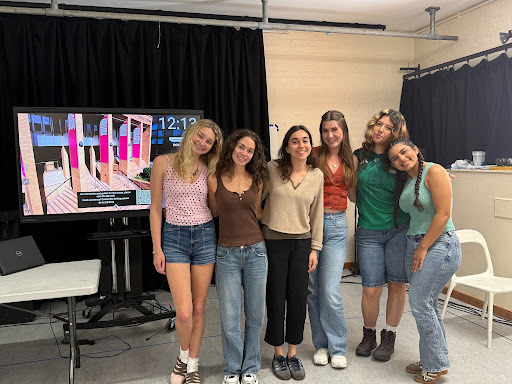
Dr. Gonca Yalçın is a phenomenal professor. To start each class, she has us (the top six most awesome members of the program) play mime warm up games before diving into seminal Scottish history and dramatic work which frames the absolutely vibrant contemporary theatre scene here! This first week and a half we contextualized its versatility of form, highlighting early popular theatre’s origins in folklore, music hall, variety, ceilidh, and pantomime. Most unfamiliar to us as Americans, these genres hold marked influence in moulding Scotland’s national identity, and, in turn, spark an almost unthinkable degree of communal respect for the arts. Perfectly aligned with our first week of course content, this past Sunday we all got to experience “A Play, A Pie, and A Pint”— a landmark institution for audiences hungry for new plays at lunchtime. Everything we had learned culminated in that production of Big Bad Riding Hood, the Summer Panto, which was riddled with larger-than-life storytelling, political irony, catchy tunes, and a brilliant connection to the audience. It was like puzzle pieces walking themselves into place the way every audience member participated in the moments of collaboration with the actors, and the actors gracefully accepted our contribution. No one took themselves too seriously, yet it never came at the expense of respect for the show.

And once we read and watched John McGrath’s The Cheviot, the Stag, and the Black, Black Oil, I think I felt my frontal lobe develop four years ahead of schedule (though I doubt it solved my general struggle with punctuality). A collection of poignant historical retellings, comedic commentary, and musical homages, the play is a cultural goldmine with a thorough understanding of the country’s identity. Its significance and depth in no way impede on its entertainment value— a possibility I often find audiences back home unwilling to consider. This Scottish model of injecting challenging questions into stories still grounded in tradition, love, and joy leaves audiences creatively, socially, and intellectually satiated and excited to return.
Uncovering Scottish theatre was a gift that I never expected would take my breath away (I should have; I’m often out of breath). I’m not sure what exactly I expected, but it’s incomparable to the rest of the United Kingdom’s dramatic domain and certainly the U.S.’s. The rich cultural roots of early performance genres here makes proud Scottish citizens loyal to the theatre, and even Scots of my own generation carry a deep respect for the art form. Unsurprisingly, I see its effects in every person I meet here. They gleefully learn dances from our own culture even though we just forced Hamilton down their throats at our amateur (but spirited!) ceilidh! They are eager to exchange stories and become friends even though our presence is temporary in their cities! They rejoice at our being here for the Fringe even though it clogs their streets the entire month of August! The playwright of Inexperience responded to an email from my friend Ava and thanked us for our enthusiasm during the run?! I’ll let her tell more of that lovely story.

In class recently, we discussed the meaningful work of the National Theatre of Scotland, and Gonca asked what an American National Theatre might look like. I’m not sure we’re ready for one, yet; we are a distinctively divided nation who suffers from a lack of funding, support, and appreciation for live theatre. Scotland, crucially, protects theatre here as a truly public art form, desired by and accessible to all. Some people in the United States may be unwilling to embrace theatre as a cultural practice (for now), but if we as theatremakers commit to creating relevant, evocative, and empathy-inspiring work, we might soon unlock the same sense of nationwide solidarity Scotland did hundreds of years ago. While I wait for my home country to sparkle the way this one does, I will remain incredibly grateful for what new passions I’ve found through this program and getting hype for Lifelong (!!!), which is beyond fulfilling.
Comments are closed